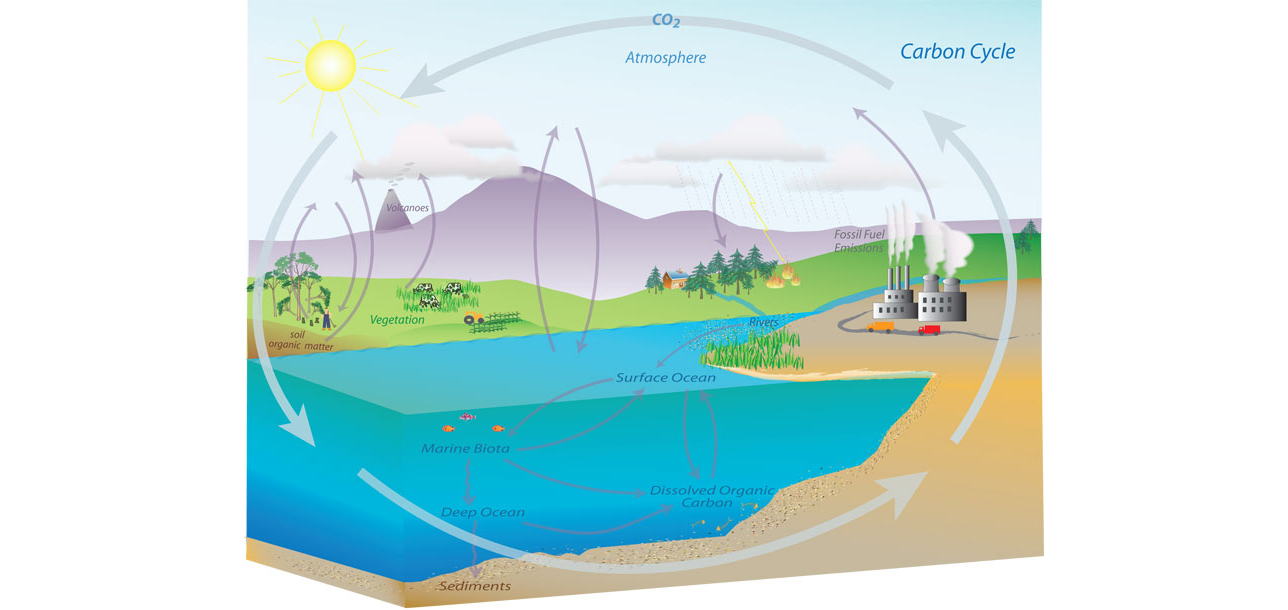
Soil Biological Properties
Healthy soil is full of life. The living component contributes to agricultural productivity and water quality. The diversity of organisms in a healthy soil ranges from the smallest one-celled bacteria, algae, fungi, protozoa, nematodes, and arthropods to the more visible earthworms, insects, small vertebrates, and plants.
Measuring the biological indicators is a measurement in its infancy. Management choices affect soil biological processes. A variety of approaches can be used to assess soil life, such as counting soil organisms, measuring biomass, measuring microbial activity, and measuring diversity (DNA). Objectives for measuring soil life should be to collect quantitative data from marked locations and identify positive changes over time.
Active Carbon
Active carbon refers to a small portion of the total organic matter pool with a rapid turnover rate, indicating that it’s available to microbial decomposers. This portion of organic matter often responds more quickly and significantly to changes in agronomic management and is more closely correlated to crop productivity than total soil organic matter. It can be measured in various ways, including permanganate oxidizable carbon, mineralizable carbon, and water-extractable carbon. For more information, refer to soil organic matter and total organic carbon.
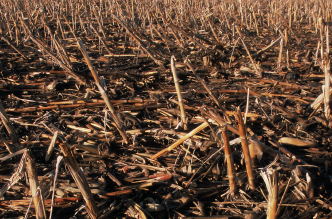
Earthworms
Earthworms are tubular, segmented, soil-burrowing members of the phylum Annelida. Through their movements and actions in the soil, earthworms can alter soil characteristics by decomposing organic matter, stimulating microbial activity, mixing mineral particles and organic matter, enhancing soil porosity and infiltration, aerating the soil, increasing soil water holding capacity, and improving overall soil tilth.
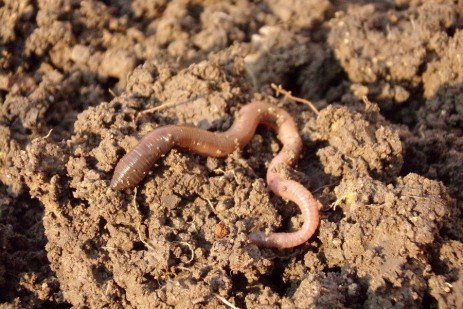
Enzymes
Soil enzymes are specialized proteins associated with microbes, humic colloids, and clay minerals. These enzymes combine with specific soil substrates (substances being acted upon) to catalyze biochemical reactions, and mainly serve to release available nutrients and energy by increasing both the decomposition rates of plant residues and the mineralization rates of nutrients. More common enzymes serving roles in soil reactions include amidase, cellulase, chitinase, dehydrogenase, glucosidase, hydrolase, phosphatase, protease, sulphatase, and urease.
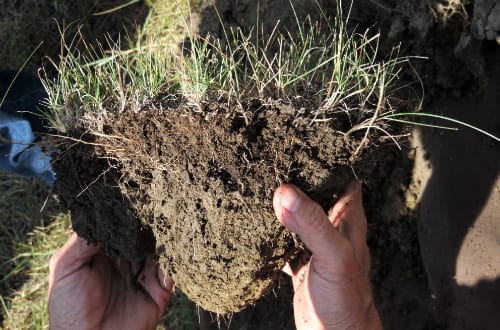
Fungi and Bacteria
Fungi in soil are microscopic and grow as long strands called hyphae, which in turn create masses known as mycelium. Mushrooms are one of the macroscopic reproductive structures that can form from the mycelia of some fungi.
Bacteria are microscopic and typically one-celled organisms that are smaller than fungi. These soil microorganisms perform a multitude of functions that may be beneficial or detrimental. Beneficial microorganisms can help to regulate ecosystems by cycling nutrients (e.g., through decomposition), transforming toxic compounds to less toxic forms, suppressing disease, and balancing water fluctuations. Some beneficial fungi and bacteria can grow within plants. For example, arbuscular mycorrhizal fungi (AMF) can mobilize nutrients (e.g., P) from the soil into plants. The rhizobia bacteria can fix nitrogen in the root nodules of legumes. Whereas, detrimental microorganisms are pathogens that can cause disease in other biota.
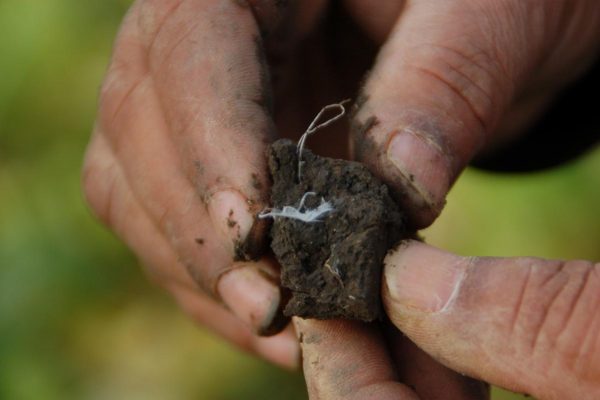
Microorganisms
Microorganisms are groups of very small organisms for which the soil is the natural habitat, and which may include groups such as bacteria (including actinomycetes and cyanobacteria), Archaea, fungi, protozoans, and algae.
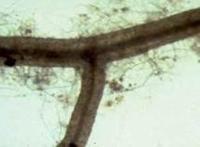
Nematodes
Nematodes are very small, slender roundworms in the phylum Nematoda, and are often classified by feeding (trophic) groups such as herbivores, bacterivores, fungivores, predators, omnivores, and unknown/free-living. Nematodes contribute to soil quality by mineralizing soil nutrients to plant-available forms, controlling the populations of other soil organisms, suppressing disease-causing organisms, dispersing microorganisms, and serving as a food source for other organisms.
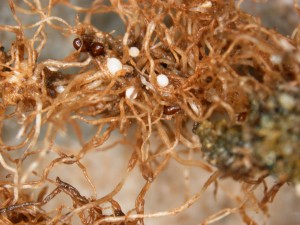
Organic Matter
Organic matter is the organic fraction of soil, consisting of plant, animal, and microbial residues at various stages of decomposition, the biomass of soil microorganisms, and substances produced by plant roots and other soil organisms (e.g., sugars, amino acids, organic acids, etc). Organic matter offers a range of biological, chemical, and physical benefits to soil, serving as the foundation of the soil food web. Soil organic matter is an essential indicator of soil health.
Soil organic matter and soil organic carbon are similar terms and are often used interchangeably. However, they are not identical. Organic matter refers to the entire pool of organic material in the soil, including carbon, nitrogen, phosphorus, sulfur, and other elements. Organic carbon refers to only the carbon component of soil organic matter. Researchers estimate that carbon accounts for about 58% of the soil organic matter.
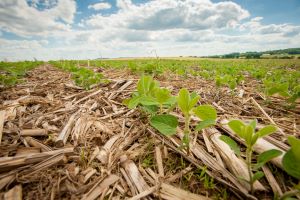
Respiration
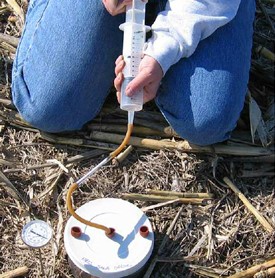
Soil respiration is the process by which carbon dioxide is released from the soil due to the biological activity of soil organisms, including soil fauna, plant roots, microbes, and the rhizosphere.
Nitrogen Fixation
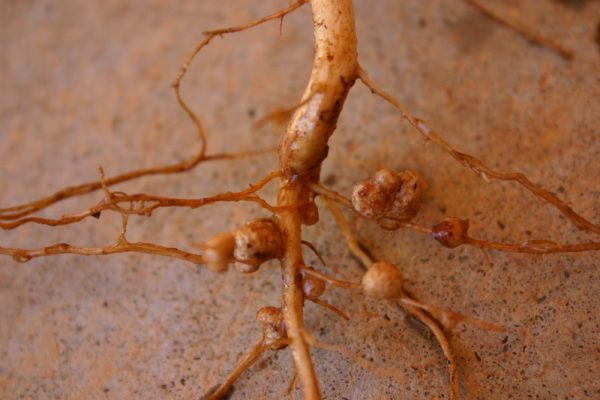
Nitrogen fixation is the conversion of dinitrogen, which is an inert gas, to reduced forms of nitrogen that are biologically available. This chemical reaction is a crucial process that regulates the nitrogen cycle and nitrogen availability in soil, performed by specialized bacteria, either in symbiosis with plant hosts or as free-living cells. Rhizobia are a general term for the types of bacteria that associate with legume plants to form nodules on roots, where nitrogen fixation occurs. Legumes and rhizobia can be utilized in crop rotations to enhance nitrogen cycling in soils and reduce or replace synthetic fertilizer applications.
Toal Carbon
Total organic carbon (C) is the portion of soil organic matter made up of organic C. Measurement is usually via high-temperature soil combustion. This property is of widespread interest due to the potential of the soil to sequester C that would otherwise contribute to climate change as CO2 in the atmosphere, as well as the importance of soil organic matter to local soil fertility. See “Soil Organic Matter” and “Active Carbon” for more details.